
Exploring Neptune: The Mysterious Blue Giant of Our Solar System

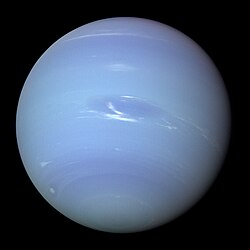
Neptune, the eighth planet from the Sun, often gets overshadowed by its larger neighbor, Jupiter, or the iconic rings of Saturn. But this distant world holds a special place in astronomy. Its discovery, unique characteristics, and the mysteries it presents make Neptune a fascinating subject for anyone curious about the cosmos. Today, I want to take you on a journey through Neptune’s icy atmosphere, its role in astronomy, and why it continues to captivate scientists and stargazers alike.
What Makes Neptune Stand Out in Astronomy
Neptune is not just another planet; it’s a symbol of how far human curiosity and technology have come. Discovered in 1846 through mathematical predictions rather than direct observation, Neptune was the first planet found using calculations based on the gravitational pull it exerted on Uranus. This discovery was a triumph for astronomy, proving that unseen forces could reveal hidden worlds.
Neptune’s position in the solar system, about 2.8 billion miles from the Sun, places it in the realm of the ice giants, along with Uranus. Unlike the gas giants Jupiter and Saturn, Neptune’s atmosphere is rich in ices like water, ammonia, and methane, which give it that striking blue color. This color is primarily due to methane absorbing red light and reflecting blue light back into space.
Studying Neptune helps astronomers understand the formation and evolution of the solar system. Its extreme weather patterns, including the fastest winds recorded in the solar system reaching up to 1,200 miles per hour, challenge our understanding of planetary atmospheres. These winds create massive storms, some larger than Earth, that swirl across the planet’s surface.
Neptune’s Role in Expanding Our Cosmic Knowledge
Neptune’s discovery was a milestone in astronomy because it demonstrated the power of theoretical physics combined with observational astronomy. Before Neptune was spotted through a telescope, astronomers noticed irregularities in Uranus’s orbit. These irregularities suggested the presence of another massive body exerting gravitational influence. Using Newton’s laws of motion and gravity, mathematicians like Urbain Le Verrier and John Couch Adams independently predicted Neptune’s location.
This method of discovery opened new doors for finding celestial bodies beyond what we can see directly. It laid the groundwork for modern techniques used to detect exoplanets orbiting distant stars by observing their gravitational effects.
Moreover, Neptune’s moon Triton is a subject of intense interest. Triton is unique because it orbits Neptune in the opposite direction of the planet’s rotation, suggesting it was captured by Neptune’s gravity rather than forming alongside it. Triton’s surface is covered with nitrogen ice, and it even has geysers that spew nitrogen gas, indicating geological activity. Studying Triton helps scientists learn about moon formation and the dynamic processes that can occur far from the Sun.
General Facts About Neptune You Should Know
Let’s dive into some fascinating facts about Neptune that highlight its uniqueness:
Size and Mass: Neptune is the fourth-largest planet by diameter and the third-largest by mass. It’s about 17 times the mass of Earth but only 3.9 times wider.
Distance from the Sun: It orbits the Sun at an average distance of 30 astronomical units (AU), which means it’s 30 times farther from the Sun than Earth.
Orbital Period: Neptune takes about 165 Earth years to complete one orbit around the Sun.
Rotation: A day on Neptune is roughly 16 hours long, which is surprisingly fast for such a large planet.
Atmosphere: Composed mainly of hydrogen, helium, and methane, Neptune’s atmosphere features clouds of frozen methane crystals.
Temperature: Despite being so far from the Sun, Neptune emits more heat than it receives, thanks to internal processes that are still not fully understood.
Rings: Neptune has faint rings made of dust particles and ice, which are much less prominent than Saturn’s but still important for understanding ring dynamics.
These facts not only paint a picture of Neptune’s physical characteristics but also emphasize how much there is to learn about this distant world.
How Neptune Inspires Modern Astronomy and Space Exploration
Neptune continues to inspire astronomers and space missions. The Voyager 2 spacecraft, which flew by Neptune in 1989, remains the only probe to have visited this planet. Its data revolutionized our understanding of Neptune’s atmosphere, magnetic field, and moons. Since then, astronomers have used powerful telescopes like the Hubble Space Telescope to monitor Neptune’s weather and seasonal changes.
The study of Neptune also informs the search for planets beyond our solar system. Ice giants like Neptune are common in other star systems, so understanding our own helps us interpret observations of exoplanets. The phrase “Neptune-sized exoplanets” often appears in scientific literature, highlighting the importance of this planet as a reference point.
Looking ahead, there are proposals for new missions to Neptune and its moons. These missions aim to explore Triton in more detail and investigate Neptune’s internal heat source. Such missions could answer fundamental questions about planetary formation and the potential for life in extreme environments.
Why Neptune Matters to Us All
Neptune might seem distant and cold, but its study connects us to the broader universe. It reminds us that the solar system is a dynamic place full of surprises. By learning about Neptune, we gain insights into the forces that shaped our cosmic neighborhood and the processes that govern planets everywhere.
For anyone fascinated by space, Neptune offers a perfect blend of mystery and discovery. Its discovery story teaches us about the power of human ingenuity. Its extreme weather challenges our understanding of physics. And its moons hint at the possibility of diverse worlds beyond Earth.
Whether you’re peering through a telescope or reading about the latest space missions, Neptune invites you to explore the unknown. It’s a testament to the endless wonders waiting to be uncovered in the night sky.
If you want to dive deeper into the wonders of Neptune and other celestial bodies, check out Celestial Journal for more engaging and easy-to-understand astronomy content.


Comments